Auto repair
Repair shops front the cost of parts and carry expensive diagnostic equipment, while some work is paid slowly through warranties and fleet accounts.
How the money actually moves
Auto repair shops buy parts for a job before the customer pays, and keep inventory on the shelf for common repairs, so cash is tied up in stock and open tickets. Diagnostic and lift equipment is a major recurring investment as vehicles get more complex. Warranty work and fleet or commercial accounts often pay on terms, adding a receivable lag on top of the parts float.
The equipment and the steady service revenue both give lenders solid ground to underwrite, so shops usually have access to reasonably priced capital.
Card-paying customers make shops a common advance target. For equipment specifically, an equipment loan secured by the tool is far cheaper than an unsecured advance against your sales.
Parts float, expensive diagnostic equipment, and slow warranty or fleet payment.

How the money moves, read straight off the account: every debit found, every position named, before anyone asks you for a statement.
The products built for this cash-flow shape
Ranked best-first for how this industry earns and spends. Each links to the full breakdown.
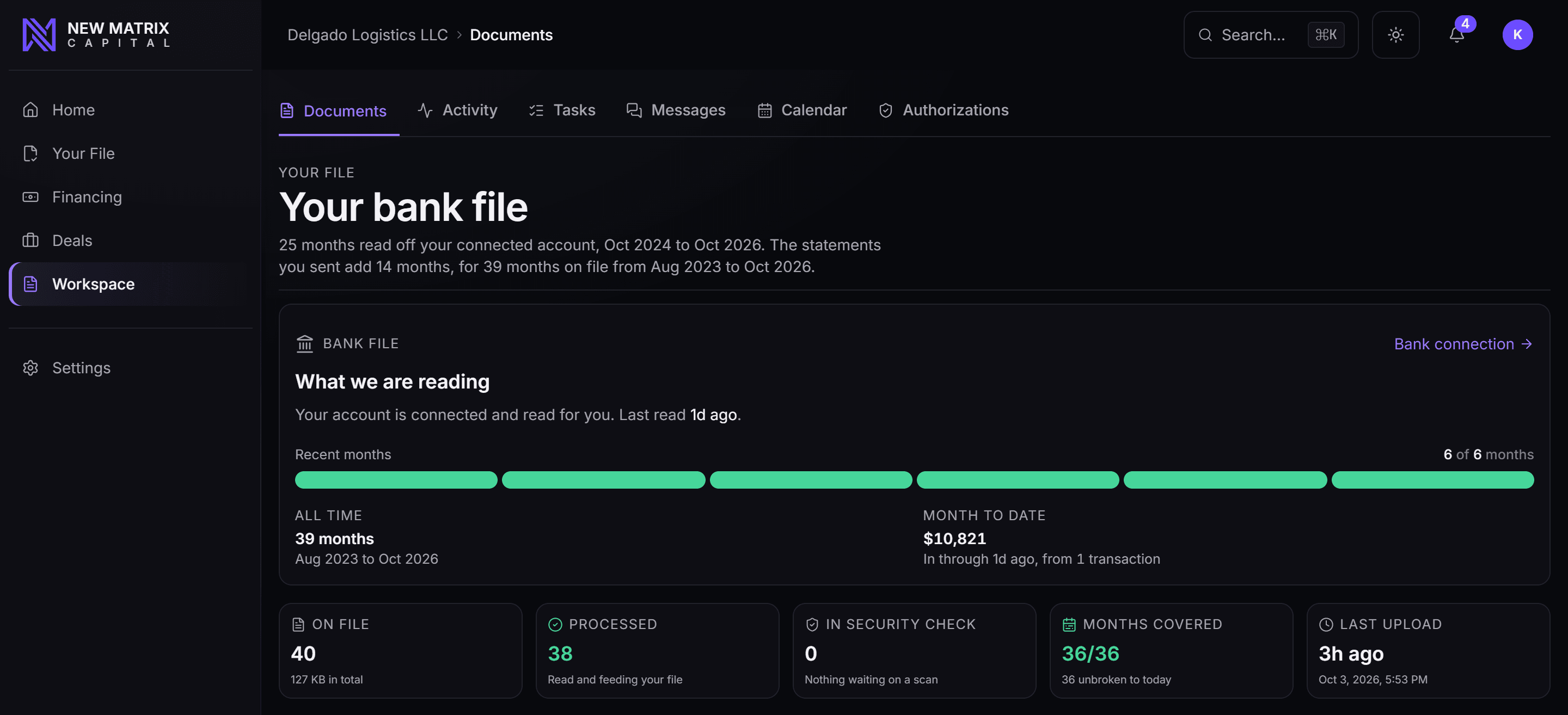
Whatever fits, the paperwork behind it is already here. Nothing in this vault has to be sent twice.
Term loans & lines of credit
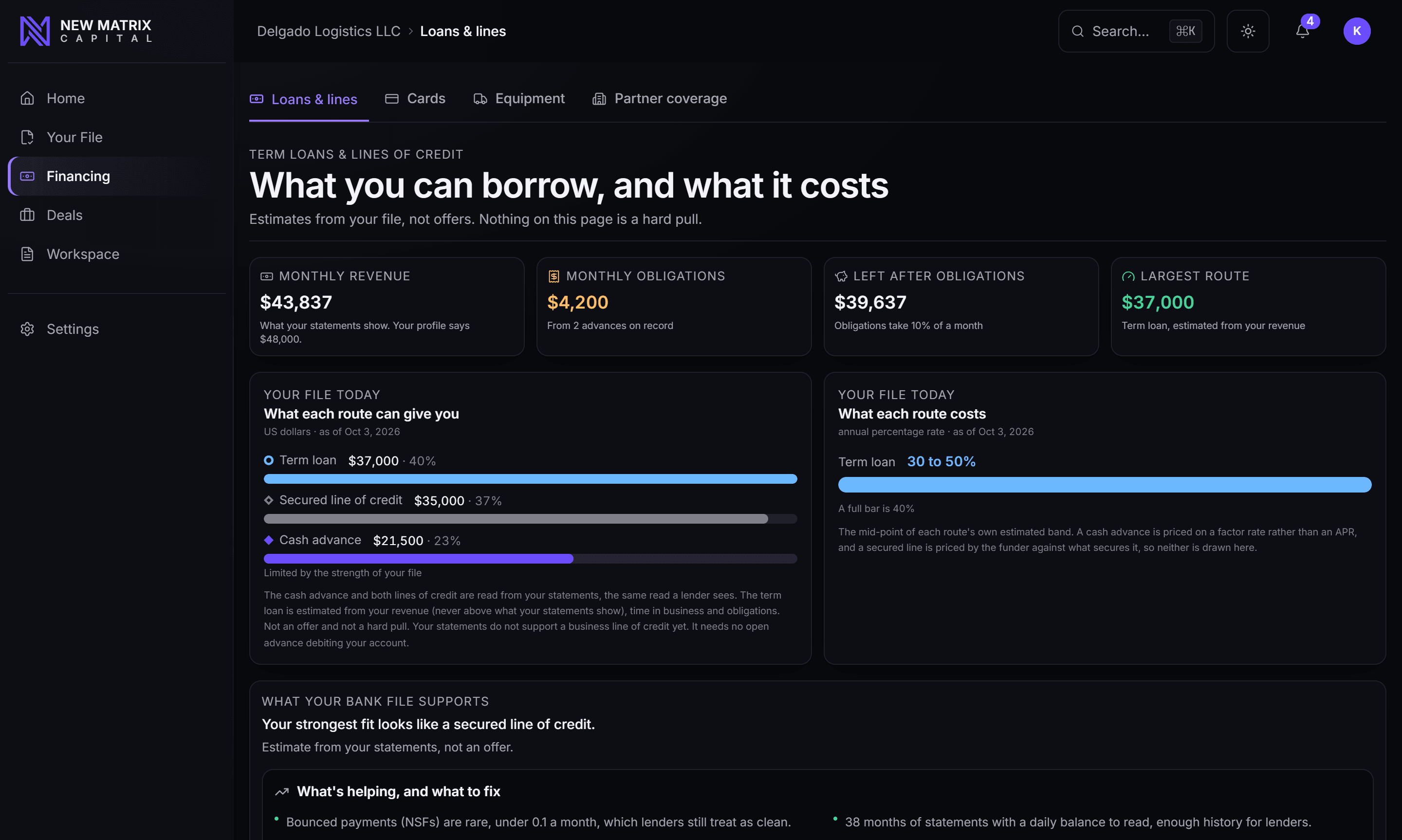
Equipment financing covers lifts, scanners, and alignment gear using the tools as collateral, and a line of credit floats parts and payroll.
Business credit cards
A business card manages parts and supply purchases on a monthly cycle and builds credit at the same time.
SBA loans
For buying the shop building or a major expansion, SBA financing offers the lowest cost and longest terms.
See which financing paths fit your file
Connect your business and we match you to lenders who fund your industry, with the real cost of each option and any missing evidence side by side. We check eligibility against your real numbers. No charge to look.